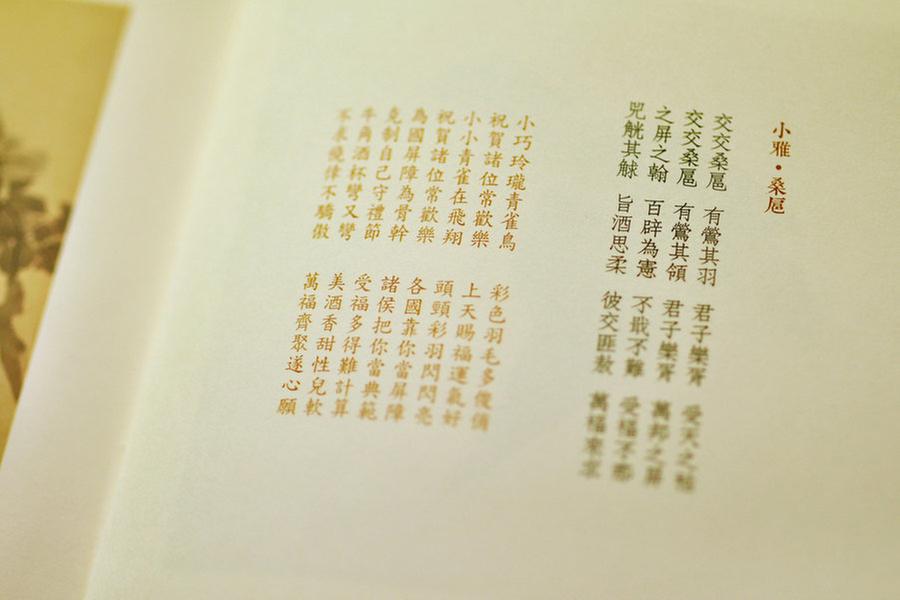
Book of Songs
Introduction
The Book of Songs, also known as Shi Jing in pinyin, is the oldest existing collection of Chinese poetry. This anthology of 305 works dates back to the Western Zhou Dynasty (c. 11th century-771 BC) and extends to the Spring and Autumn Period (770-476 BC). It holds a significant place in Chinese literature and culture as one of the five canonical classics traditionally attributed to Confucius. Over the past 2,000 years, it has been extensively studied by scholars in China and neighboring regions.
Compilation and Canonization
The compilation of the Book of Songs is believed to have been a collaborative effort over several generations, and it is not definitively attributed to Confucius himself, although he is traditionally associated with the selection and organization of these poems. Confucius emphasized the value of these poems as a medium for expressing genuine emotions. In the Analects, he referred to the Book of Songs as a realization of authentic feelings, akin to much of Chinese poetry that employs imagery, often using animals and plants, to convey emotions.
Literary Themes and Style
The poems within the Book of Songs cover a wide range of themes, such as battles, agriculture, education, marriage, and nature, particularly animals and plants. These themes not only reflect the social and cultural milieu of ancient China but also have had a lasting influence on its civilization. The poetry is characterized by its simplicity and elegance, often encapsulating profound meanings within concise language.
Artistic Interpretations
The Book of Songs has inspired numerous artistic endeavors, including the recent publication of the two-volume hardcover set, Illustrations of Wildlife in the Book of Songs, by the Shanghai Ancient Books Publishing House. This publication juxtaposes original poems with contemporary translations and watercolor illustrations by Jun Hosoi, a Japanese Confucian physician from the Edo period. The artwork and text aim to provide readers with a vivid imagination of the poetic scenarios while elucidating the cultural significance of the depicted flora and fauna.
Cultural and Academic Influence
The Book of Songs has played an integral role in Chinese cultural and academic traditions. Its poems have been a source of inspiration for music, dance, and literature and have influenced various aspects of Chinese society, from moral philosophy to artistic expression. In 2018, China Post issued a set of special stamps themed on the Book of Songs, featuring six major poems from the collection, illustrating its continued cultural relevance.
Archeological Discoveries
Archeological findings have shed more light on the historical significance of the Book of Songs. Chinese researchers have restored 93 bamboo slips from 2,400 years ago, which feature 58 poems from the collection. These slips, dating back to the Warring States period (475-221 BC), provide invaluable insights into ancient Chinese philology, linguistics, literature, and culture.
Modern Adaptations and Media
The Book of Songs continues to inspire modern adaptations and media. An immersive digital art exhibition titled "Confucius Code" showcased elements from the Book of Songs, employing advanced digital technologies to offer a contemporary exploration of Confucian thought and cultural heritage. Additionally, musical albums and theatrical performances have drawn from the Book of Songs, illustrating its enduring impact on contemporary art and culture.








